History of building lots from Boonville Town Historian Jim Pitcher:

History of building lots from Boonville Town Historian Jim Pitcher:

Circa 1934
I spied them both as they had come to rest there in the corner years before; having been slung aside at the thought of their future uselessness; carried to the attic to be out of mother's way; foresaken for an endless procession of quart milk bottles upon our steps; betrayed by progress- - having served us in our time and according to our need. Aluminum. One a two quart pail, the other three.
To the corner where they lay I strode at once as if compelled by mystic force. Even the impulse to blow away the dust seemed wrong; heartless! How then could I pull upon their
The year we discovered them shiny-new in our kitchen, I was nine and brother John was seven. Mother explained the pails quite simply: The price of milk had risen from five to ten cents a quartand Grandpa was furiously defiant! He had bought a cow! At the tailor shop that morning he had closed a deal with farmer Wickman, (who had unsuspectingly come in the shop looking for suspenders.) Wickman was to keep Grandpa's cow and charge him only seven cents a quart.
Starting Monday, John and I were to take the new pails and---
It was early summer. We banged the pails together as we swung them through the air on our
way to Wickman's. He lived alone in a little white house near the top of Ford street, which we found to be six houses up our street, through Douglass's back yard and a hole in the fence. In the barn behind the house he kept his horse, a few hens, and two pigs, as we had learned two days before when mother took us there to see where he lived. Upon arrival we tossed our pails into the wagon; clattering announcements of our arrival and our eagerness to start for the other side of town where he kept his cows, (in a narrow pasture between the canal bed and the railroad tracks.)
But old Joe Wickman was just no man to hurry! We climbed into the wagon seat and sat waiting as he limped liesurely around the mare, hitching her to the wagon. We waited some more as he fed the hens and then disappeared into the house. Finally he was in the wagon seat and we were starting for the pasture.
The steady clapping horseshoes on the pavement and the rumbling wheels excited us. John and I kept a firm grip on the wagon, expecting the worst to happen. We shouted questions to Joe about the horse. After we had passed the downtown busy-section, he let each of us hold the reins a moment. Down at at the end of Thornton Avenue Joe took the reins and pointed to the faded red barn across the tracks.
"See there, boys? The cows is waitin'!" We thrilled to the tilt of the
wagon as we rolled off the pavement onto the sloping gravel road, which led down across the railroad to the pasture.
Joe milked in the barn. We watched. Johnny practiced saying "Giddap!" and "Whoa!" I petted the kitty-cat. Joe called him a "mouser." We played in the hay awhile. As we climbed the gravel road and again rolled down Thornton Avenue, the western sun darted behind houses and elm trees; color glinted our two new pails which were full of warm, rich milk.
As the summer passed, some nights we ran cross-lots to Ford Street where we caught the wagon on the run, slinging the pails over the sides and climbing aboard with real skill. One night we missed him and walked the full distance to the place across the tracks. Joe was leaving; chores done. He climbed off the rig and limped to the barn, shouting "If ye haint-a walked the hull way by yerselves, ye devils, I'd a lef yuz here wi-out a drop!" He disappeared into the barn. We heard the clatter of pails and Joe muttering to himself. When he came out of the barn, he thrust the pails into our hands.
"I'll warn ye now - - Don't be late agin or ya'll go wi-out!" We never were.
In the fall, Joe sold most of his cows; he kept a few (including our cow) in the barn on Ford Street, and in the following wintry months we trod the snow in Douglass's yard. One night after filling the pails, Joe said "Come in the house a minute, boys." We followed him through the door to the kitchen and into the dining room where he showed us a new brown suit. Our milk (at seven cents a quart) had finally totalled the price of one of Grandpa's "Tailor-Mades." Of slightly more interest to us was a multi-colored kaleidescope and a three-dimensional picture viewer. We spent about an hour there, I guess.
In the spring, Joe had the rheumatism so that he could scarcely limp around. We helped him with the chores; threw down hay and fed the hens. Then, the next thing we knew, relatives had come from the city. They were selling the cows and the chickens, and that was the last we saw of Joe, for within the week he had passed away.
John and I would have been content to put away the pails for good that week, but Grandpa had made another deal with a farmer up the road. So we carried the pails past Joe's place to the other man's farm; that is until we started getting milk in bottles from Stoddard's wagon. Then gradually as their labels grew from "Grade A-Raw" to "Grade A Pasteurized, Homogenized, Vitamin D added, 400 units per Quart," we came to realize that milk would never again taste the way it did way back when we poured it from the warm, unlabeled pails.
I abruptly left the dingy pair in their obscure corner, untouched and undisturbed. The two old dented pails that had led us to the narrow pasture, ( which is now Route 12 - the busy highway north,) were gone, cast aside forever, beyond repair, no longer needed; gone, like the horse and like the pasture which lies beneath cement and flying rubber tires, like Joe, like Grandfather. If I could only have lifted two old pails and set out to catch the wagon just once more, but I could not break the eternal silence wherein they and my boyhood secrets lie - - - in memory warm and rich as the milk we had carried in the sunsets.


123 Schuyler St.,
Boonville NY.
Circa 1944
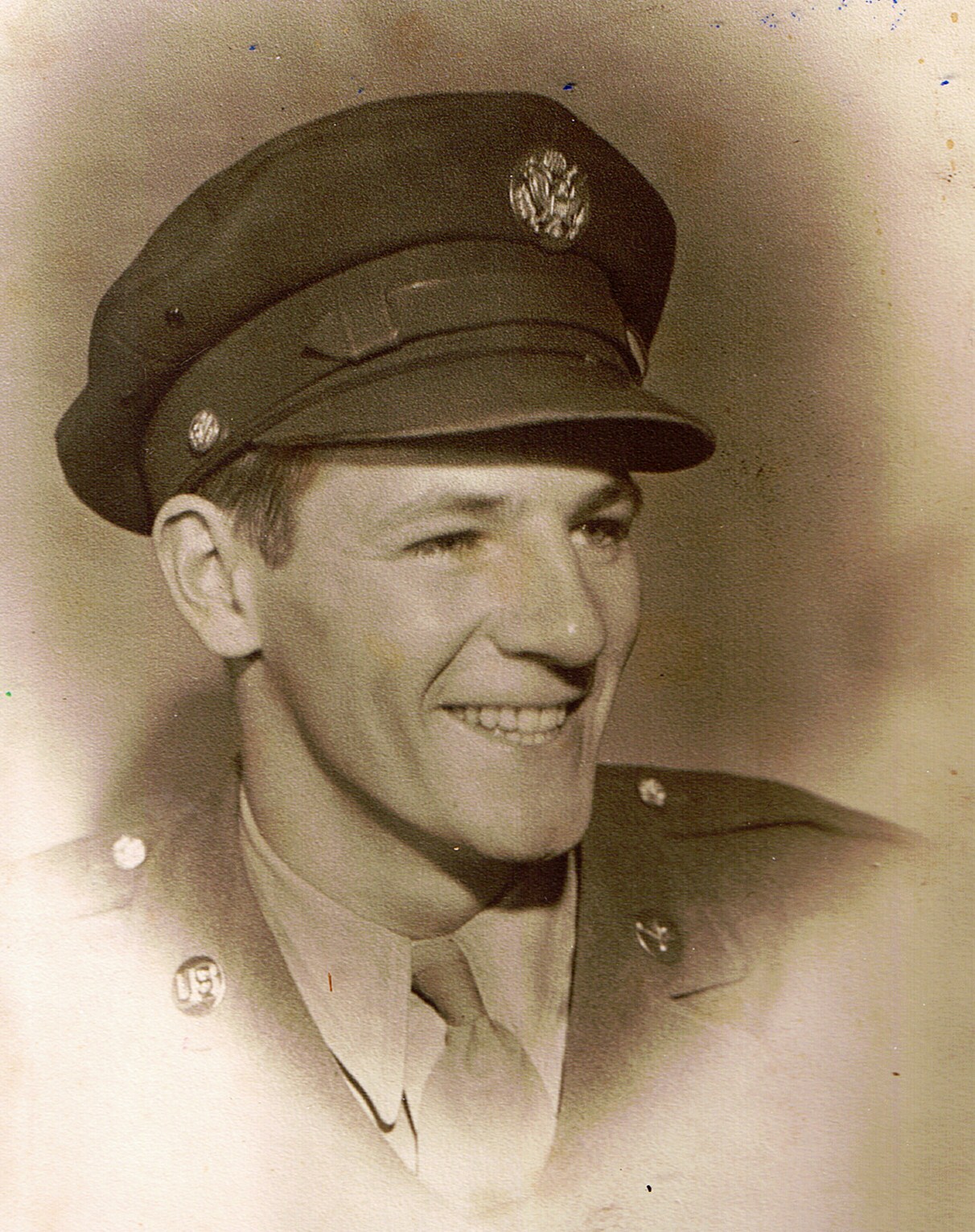
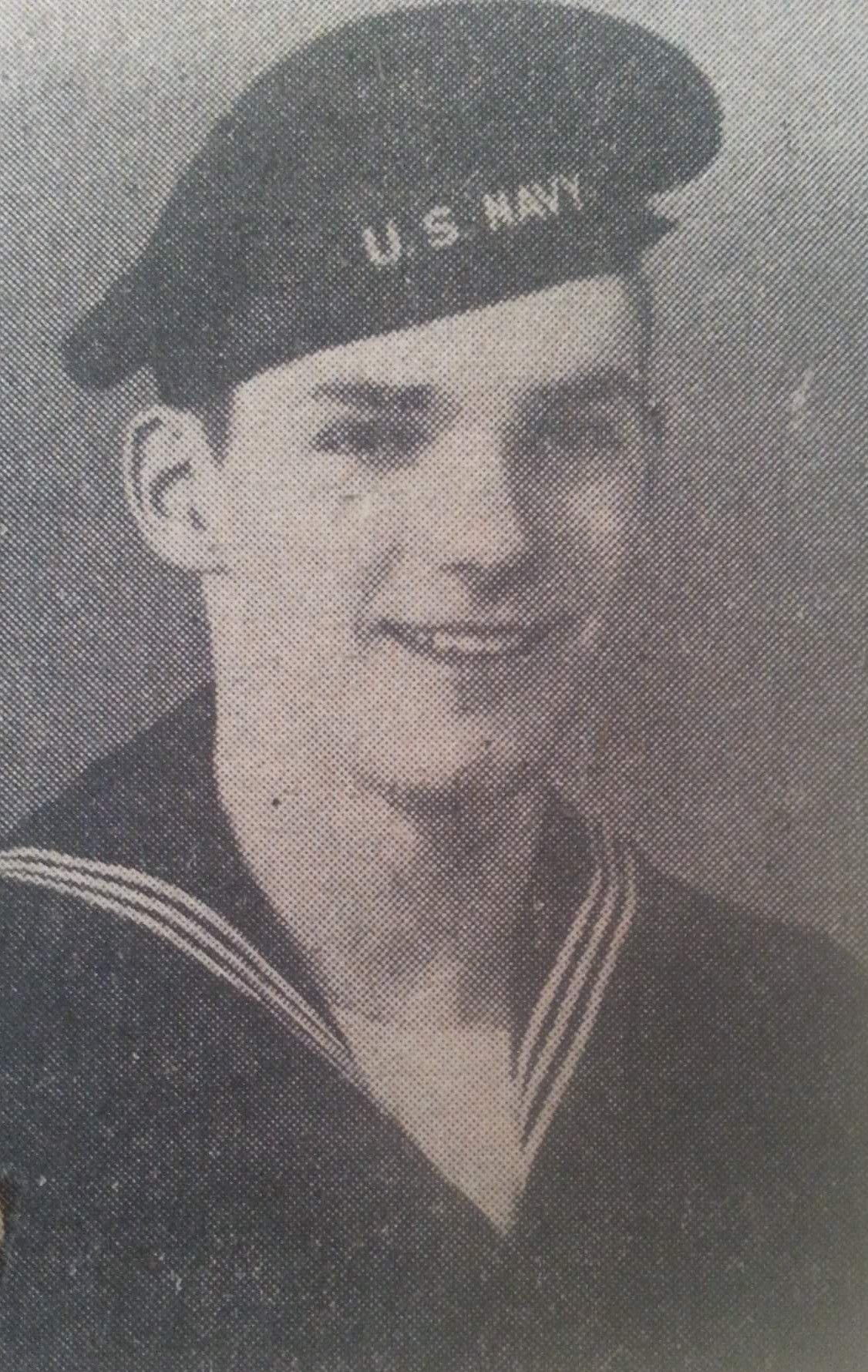
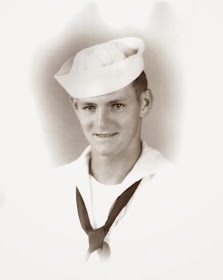
Recently widowed Dorothy Christina Cavanagh Moonan proudly standing in front of her home. The two star flag in the window is evidence to the fact that two of her sons were currently serving in active duty during, World War II. A third son, my father, Edward Reginald Moonan had just graduated high school and enlisted and was training at Sampson.
So, in July of 1945 Grandma Dodo had three sons in active duty military during World War II.
Edward served on a floating dry dock in the Philippines until his honorable discharge in August, 1946.
Some gave all. Our family certainly contributed to the War effort. Grandma Dodo was remarkable and must have been very proud of her family.
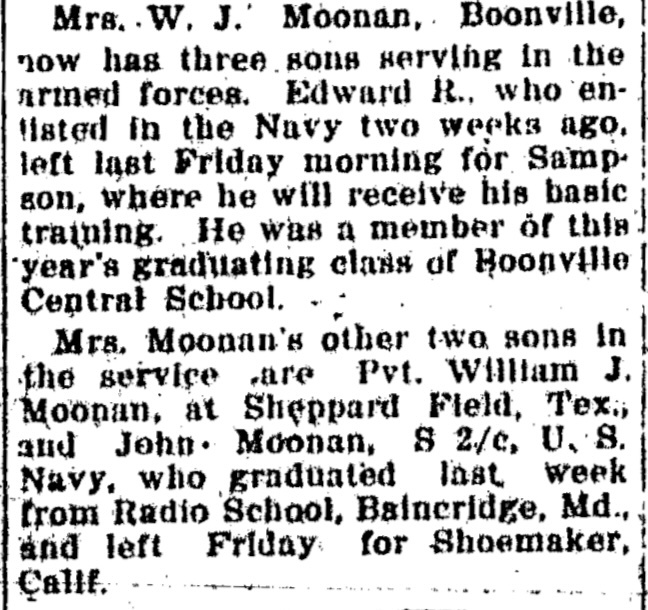 July 1945 Boonville Herald
Oral history in our family has always been that my great grandfather
John T. Cavanagh was an altar server at the ceremony when the cornerstone of
St. Joseph’s Catholic Church Boonville, NY, was placed.
Cornerstone dated 1878.
St. Joseph statue in front of our church. Note cornerstone lower right.
John T. Cavanagh circa 1912, at daughter
Dorothy Christine Cavanagh Moonan’s
First Holy Communion
St. Joseph’s Catholic Church, Boonville, NY.
He is second man from left back row, white hair, dark mustache.
St. Joseph’s CatholicChurch
Charles St., Boonville, NY. Photo taken in 2015
John T. Cavanagh was a devout Catholic. His marriage to Christina (Tina) Pirnie Cavanagh in February 1886 was unusual in that she was of the Protestant Faith, in those days, it was considered a, mixed marriage, she worshiped independently at the Presbyterian Church on the corner of Church St & James St, Boonville.
John T. Worshiped and raised his children in the Catholic faith at St. Joseph’s.
In continuation of the oral history of the Cavanagh family in Boonville.
Boonville has a Catholic cemetery where the ground is consecrated for Catholic burials. There is a separate cemetery for Protestant burials. John T. Cavanagh was diplomatic in his solution to the conundrum of his final burial wishes to rest with his beloved wife, (Tina) Pirnie Cavanagh.
He purchased burial plots on both sides of the dividing line between the Catholic and Protestant Cemeteries. Allowing the family members to be buried in their respective consecrated ground, according to their faith practice of choice, together in one plot.
These trees divide the Catholic and the Protestant sides of the Boonville, NY, Cemetery.
Nestled there together on each side of the line are the graves of our beloved Cavanagh, Pirnie & Moonan family members.